
Day 24
| Start | End | Miles |
|---|---|---|
| Malta | Glasgow | 69 |
I left Malta at 6:30 AM. This was the first morning that I started out with three layers on instead of four. (Four layers is all the outerwear I am carrying.) Ten miles down the road I was swapping out my long sleeve layer for my vest layer. By mile 20 I was down to shirt and windbreaker. That said, the average temperatures are still 8 degrees below normal for this time of year.
I’ve been following U.S. Hwy 2 since I was in Eastern Washington. What I learned is that this highway was the first interstate highway. It was built in 1919 and named the “Theodore Roosevelt Highway,” in honor of the recently deceased President. When first built the road was a simple dirt affair that was nearly impassible in winter. The original route went from Portland Maine to Portland Oregon. It was instrumental in providing livelihoods for many of the residents in small towns all along the route.
Buffalo was a staple in the Plains Indians diet. The buffalo also provided the plains Indians with clothes, bedding, shelter and utensils. When winter set in, it was still the buffalo that sustained the Indians, even though there were no animals to hunt. It was pemmican made from buffalo and berries that was the winter staple in their diet. Pemmican was made from buffalo meat, bone marrow, berries and oil. The Ascorbic Acid in the berries acted as a preservative. The pemmican was wrapped in skin bags for storage. Properly prepared, it would last indefinitely. What made it special and allowed it to sustain the Indians through the winter is the fact that pemmican has 10 times the nutritional value of fresh meat. That made it easier to transport than freshly caught game. One pound of pemmican was equivalent to 10 pounds of fresh meat.
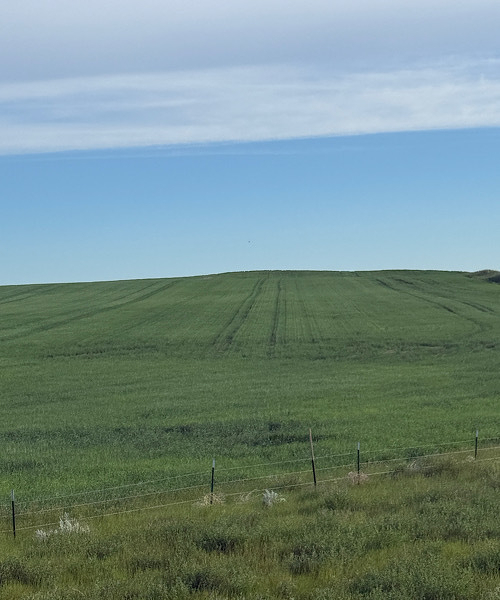
Green, meet blue. Blue, meet green.
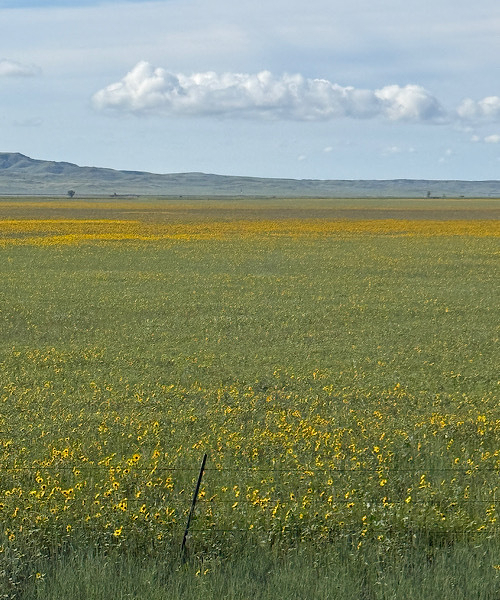
A crop of Rapeseed, grown for its oil-rich seeds. Say hello to your next bottle of vegetable oil!
A Brooks No. 17 Bicycle Saddle
is the most comfortable saddle for long distance touring.
Entry # 2,391